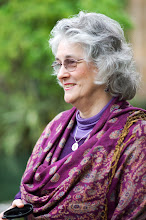
There was a
time when Witches (and Wiccans) kept deep within the broom closet, for all
manner of reasons, most involving fear of discrimination at work, school, or
housing.
I remember
the first MerryMeet held on the East Coast in the mid-eighties, at Rowe Camp & Conference Center in
Massachusetts. That was when I
first met some of the wonderful folks at the then-Northeast Local Council:
folks from NECTW, EarthSpirit, and the then-Lone Star LC from
Texas, among many others. At that
MerryMeet I saw my first tea dance.
It seemed to have a very New York flavor, especially with BrightShadow[1]
in leathers.
I distinctly
remember at the follies, the time when members from all over show their
talents. A Witch from Seattle (who
shall still remain nameless unless when he reads this, he gives me permission
to name him) played guitar and sang; someone took a photo. The second he finished his song the
musician tromped up an aisle in a rage toward the person with the camera and
grabbed it away from him. I don’t
know if he took the film canister or what – this was, of course, many years
before digital cameras or the Internet.
What I, as a newish Witch brand new to East Coast Pagandom, I do
remember was shock. Of course, I
knew well enough at that time not to name names or take photos. I was mildly surprised to see someone
taking snapshots, but to me it didn’t seem to really matter in this instance
because it was only a photo of a man in street clothes singing and playing
guitar, with nothing indicative of witchiness visible in the shot.
Over the
years since then, photos of outgoing and newly elected Board members have been
taken, but only for those in the photos and for CoG’s archives. A couple of years at PantheaCon former
National First Officers were rounded up for photos. Again, these photos were taken with cameras that had
film. I do have some of them. They’re especially valuable to me
because some of those pictured have departed this plane. I would publish them here if I were
able to contact everyone shown, but alas! some appear to be unreachable.
* * * * *
I also
remember how the Reclaiming role of Dragons originated. We used to meet at Ocean Beach in San
Francisco on the Solstices. We
purified with a ritual plunge in the Pacific,[2]
then returned to a bonfire[3]
for the ritual. The bonfire
attracted other beachgoers, particularly drunks in search of a good party. Sometimes the media would get wind of
this gathering, drawing unwanted cameras and reporters.[4]
Back in our
Reclaiming Collective meetings, when we debriefed and critiqued our rituals, we
came up with a role[5] to address
such potential intrusions. I named
that role Dragon, but in more traditional Wiccan traditions, the role of
border-keeper is usually assumed by a tyler (from the Masonic term)[6]
or Man in Black. A comparable role
in Dianic
Craft is called Guardian.
* * * * *
Also back in
those days, one needed to warn one’s children of speaking freely about their
parents’ religion. I did so. My daughter was a friendly, chatty
girl, and I knew it would be easy for her to mention something about home and
her mom’s being a Witch that would only encourage teasing and maybe even ostracism. Further, for many of those years I was
a single mother, a situation that made me feel more vulnerable when it came to
potential harassment. So, but for
hanging with the children of Witchen friends, she learned to be discreet about
the witchy goings-on at home.
The fact
that I was known in the Craft by a Craft name rather than my mundane name
helped us maintain a more conventional image. Still, I hated to have to do this. What other religion requires that its children hide? For that matter, what other religion
doesn’t teach its children? This
is fodder for a different feeding, but suffice it to say that back then Witches
were discouraged from involving their children. The Craft, with its secrecy and mysteries,[7]
was considered not suitable for children.
I’m happy that Pagan/Witchen culture has changed in that regard. Now there are Spiral Scouts, children’s programs at
festivals, teen camps, and the like.
Not to mention CoG’s Hart & Crescent Award[8]
for Girl Scouts and Boy Scouts and other youth groups and their leaders.
There were
good reasons for maintaining anonymity back then. Today I’m glad to say there are far fewer. This is due, in large part, to the work
over the years of CoG and other groups, as well as to individuals who have a
public face, whether using a Craft name or not. The day when CoG can proudly and openly publish the names
and faces of its National Board officers has arrived. Praise be!
[1] Publisher of the
wonderful Enchanté: The Journal for the Urbane
Pagan, with its serial “All My Avatars.” Old issues may be available from purveyors of used books.
[2] I know this
sounds as though it would be wicked cold, but it really wasn’t so bad. For one thing, the water felt warmer at
Midwinter than at Midsummer, at least to me it did. Besides, one only plunges for a brief moment, than towels
off, dresses, and gathers round the bonfire.
[3] There’s a
wonderful photo by Michael Rauner of this bonfire, sans people, in Visionary
State: A Journey Through California’s Spiritual Landscape, by Erik
Davis.
[4] The same thing
happened at one of the early Spiral Dances held at the SF Hall of Flowers. The place was over-packed with people,
and along came a crew from the SF Chronicle newspaper. Volunteer Sipko skilfully sent them
away.
[5] We devised other
roles, too, such as Graces, tales of which may be told another day.
[6] Over the years,
my late friend Grey Cat and I discussed these differences. IIRC, she wrote about tylers in Deepening
Witchcraft: Advancing Skills & Knowledge.
[7] A big topic I plan to discuss in a
subsequent blog.