Tuesday, February 27, 2018

What and Who Is a “Solitary” Witch?


I’m a bit of a geek about Pagan identity and solidarity.  I hold to the fact that we must define ourselves lest scholars and journalists do it for us and we disagree with how they’ve done that defining.  

For some years the designation of “solitary” practitioner of the Craft has bothered me.  Not because it’s not valid; it is.  Rather because it overlooks other Witches who work neither in a coven nor alone.  (I’m talking about Witches here, not any other manifestation of Paganism.)

I’ve been a member of the Covenant of the Goddess (CoG) since 1981.[1]  When I joined, I was part of Holy Terrors coven.  However, like anything else, covens have life spans, and some are longer than others.  When I left that coven, which eventually dissolved, I maintained by CoG membership, except that I had to change my membership type to “solitary.”

There were good reasons for CoG to have that category of membership when it was founded in 1975 – another era entirely when it comes to Craft and Paganism in general!  Some Witches are self-initiated, which I recognize as valid.  Some really do prefer to work alone.

Then when it comes to surveys of Pagans, we may be given dozens of identifications from which to choose, and one of them is “solitary.”  My point in writing this is to expand our thinking about Witchen identity and those who practice it.

I maintain my membership in CoG under the designation “solitary” because that’s the only option other than coven member.  However, I am not a solitary practitioner.  I rarely work alone.  Further, I suspect others called solitaries are not necessarily Witches who work alone.  The term I’ve settled on for now for Witches like me who belong to no group in particular but who work, make magic, and celebrate the sabbats with others is “floater.”  (I suppose we could call ourselves “besom flyers.”)

Here are some of the reasons people call themselves “solitary” Witches:

«    The Witch is between working groups.  She[2] may have belonged to a coven or covens in the past.  She may have left for any number of reasons, or the coven itself may have dissolved, having lived out its lifespan.  Her preference is to work within a coven, but she isn’t doing so at the moment.

«    The Witch has been seeking another coven, but hasn’t yet found the right one, the one best suited to her proclivities, interests, and social skills.  Being temporarily covenless, she is a “solitary.”

«    The Witch has experimented with circles and other groups, such as a CUUPS congregation, yet has not chosen to commit to a coven, per se, or to a tradition.

«    The Witch is deep in the broom closet, wary of revealing her religion to others.  This may be because she lives in a place where she feels she would be vulnerable to the disapproval of others in her neighborhood, school, workplace. or other social grouping.  Whether this is a realistic assumption on her part is not my place to decide; however, we do have a Constitution, the First Amendment of which guarantees religious freedom in this country.  In the day-to-day lives of some, in some regions of the country and in some communities, conformity with the dominant religions in that area and intolerance of different expressions of spirituality and religion are the norms.  When such is the case, how can one be expected to find other Witches?  Of course, the existence of the Internet has opened up possibilities for the unaffiliated

«    The Witch has been declined admission to one or more groups or has been kicked out, for whatever reason(s).

«    The Witch is socially maladroit.  Or, like me,

«    The Witch works with various groups here and there, depending upon the purpose of the ritual and the circumstances.   Hence, she is a “floater” or “besom flyer.”

I celebrate the sabbats with an individual coven or other circle, or with a tradition in a rituals performed for the public.

If I have some particular personal ritual I need or want to perform, I can always find collaborators from among my Witchen friends.  One example of this is when I created a ritual for a daughter recently released from rehab.  I designed this rite using the story of the return of Persephone from the Underworld and back into the arms of her mother Demeter.  In attendance were the mother and sister of the young woman as well as some of her close friends.  Each left with a novena candle bearing an image of Persephone that was consecrated in the ritual and taken home to be fired up if and when ‘Persephone’ felt she needed extra support and reinforcement

LEADERSHIP

A related question is whether a “solitary” can be a leader.  The answer is a resounding yes.  Obviously one who works alone has no coven to lead.  Nevertheless, leaders seem to emerge when there’s a need regardless of formal membership in any organization, or even affiliation of any kind.

Par exemplum, I can name other Witches who lead, and cite examples.  However, the examples I know best come from my own life so I’ll offer a few.  

In my case, I’m a leader in the sense that I have led, and sometimes still do, yet I am not leading a group of any kind.  I design and perform marriages, seinings, menarche rites, memorials, house blessings, partings/divorces, adoptions, and other rituals for Witches, Pagans, and others.  As mentioned above, I can always round up collaborators.  Below find three examples of different kinds of leading without a group.

«    For the most recent Parliament of the World’s Religions in Salt Lake City last October, I produced a quite substantial performance ritual using glorious masks of different goddesses created by Lauren Raine.  This undertaking required skilled priestesses from many places around the U.S. and beyond; 13 wore masks, three narrator/storytellers, singers and musicians, technical work, and other support people.

«    I frequently participate in interfaith activities in which I’m viewed as an authority on my religion.  In such cases, I have to emphasize our diversity, the fact that we have no sacred text containing our “laws,” and that I can only speak for myself.  I offer to seek out representatives of specific Pagan religions (a Druid, for instance) whom they may query.

«    Third and most significant, last summer I performed an initiation of a young man I’ve been working with for the past four years.  Although I am currently unaffiliated with any particular tradition, I remain oath-bound to my sisters and brothers of the art.  The time had come for this person to take that step, too.  So I recruited two other priestesses of various traditions (Order of the Temple of Astarte in LA in 1970s; Feraferia [not specifically Craft]; TOTEG [Temple of the Elder Gods]; Reclaiming; Faery/Feri; Gardnerian; CAW [Church of All Worlds]).[3]  In addition to the pre-initiation challenge(s) I gave him, I solicited from each of my collaborators a challenge for him to complete before the rite.  Then I designed a ritual of initiation that I wanted, and performed it.  He doesn’t really have an affiliation or membership in what we would call a tradition, per se, but he is the first of what I am calling the “NightMare Line.”  I feel really good about that, and so did everyone else involved.  But, hey, I’m a ‘solitary.’  :-)

So I guess I, and other Witches in similar situations or of similar temperaments, don’t really fit more standard descriptions.  I leave it to the reader to decide if this qualifies as leadership -- at least until the Pagan world changes from what it is now, and, as we say, “She changes everything She touches, and everything She touches changes.”

(Thanks to Gwendolyn Reese for the prompt to explore this topic.)


[1]           CoG has confronted changes within the Craft and within various social and political realities that did not exist when it was founded, with various degrees of awkwardness and some success.  This writing is not about CoG.

[2]           I’m using the singular pronoun for females because that’s what I am and it’s easier.  Reader can translate as she feels necessary.

[3]           All this in only three seasoned priestesses!

Tuesday, February 20, 2018

AAR Annual Meeting - II


Native Traditions in the Americas and North American Religions Units.

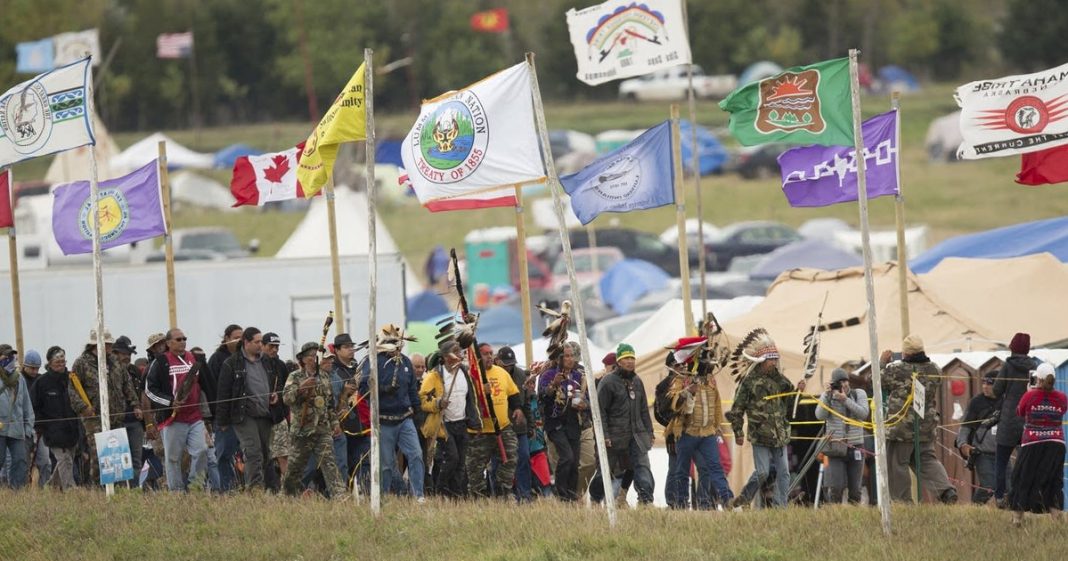
Standing Together at Standing Rock: Cross-Cultural Perspectives and Critiques: The #NoDAPL campaign at Standing Rock drew thousands of protesters representing tribal nations in the United States, indigenous peoples from around the world, as well as diverse religious groups and nonindegenous peoples.  The protesters were drawn by a common cause but participated in ways that both created unity and dissension.  The papers address these distinctions ranging from interrogating Standing Rock as a social or protest movement to address these distinctions ranging for interrogating Standing Rock as a social protest movement to examining the occupation as a milestone moment in modern inter-religious dialogue.  Papers give consideration to the complexities of the movement while drawing on indigenous cosmological understandings and global interests in human-earth relationships.

«    Margaret McMurtrey – Standing Rock: Movement or Spiritual Call?  Confrontations Concerning Space- and Place-based Rhetoric.  Standing Rock: social movement or spiritual call?  To the non-native observer, it is a movement: a call to action on behalf of the environment and the people of Standing Rock.  For most Native and indigenous people, it calls forth a complex and nuanced relationship with the land.  This paper examines the current and historical legacies of native and non-native alliances around social and spiritual “movements” that help to interrogate Native and non-native responses to Standing Rock.  Native people are demanding that the “meaning” of Standing Rock be explained within a rhetorical context of space and place.  The challenge: how can the language of ”social movement” be illumined within the rhetoric of space– and place-based religiosity?  Can space- and place-based rhetoric be articulated to explain the nuances of Standing Rock from a Native and indigenous perspective while facilitating the understandings of and promoting the formation of large-scale community alliances? 

«    Peter Huff – Parliament of Religions on the Prairie: Standing Rock as Interreligious Event.  The 2016-17 Standing Rock phenomenon constitutes a turning point in the history of modern interreligious dialogue.  Oceti Sakowin and related encampments represent not only the greatest Native American tribal gathering since the nineteenth century but the most extraordinary open-air interfaith “camp meeting” in U.S. history.  Representatives from Buddhist, Hindu, Jewish Muslim, Sikh, Unitarian Universalist, Wiccan, Protestant, Catholic, and Quaker traditions assembled with Native American spiritual leaders and international indigenous leaders, forming not only a spontaneous parliament of religions on the prairie but the first mass modern interfaith event informed by indigenous values and practices.  Based on first-person participant observation and interviews with local actors, the paper traces the development of the Standing Rock interreligious experience from the spring of 2016 to the February 2017 camp evictions.  Drawing upon the critical literature on the history of modern interreligious dialogue, the paper identifies Standing Rock as a milestone in global interreligious dialogue.  

I came into this session after it had commenced; however, I think I experienced more than 90% of it.  Again, my post-stroke note-taking leaves much to be desired.

Chief Arvol Looking Horse
Peter Huff spoke of the leadership of Chief Arvol Looking Horse, 19th Generation Keeper of the Sacred White Buffalo Calf Pipe Bundle.[1]  White Buffalo Calf Woman (Ptesanwin) brought the Pipe to the Dakota People more than 300 years ago.  Chief Arvol Looking Horse said:

In our prophecy, the White Buffalo Calf Woman told us she would return and stand upon the earth when we are having a hard time.  In 1994, this began to happen with the birth of the white buffalo.  Not only their nation, but many animal nations began to show their sacred color, which is white.

Those gathered in protest performed and/or participated in an “Esseron”[2] interfaith ritual.  This turned out to be a much bigger deal than the organizers expected.  Karen Van Fossen, a minister at Bismarck-Mandan UU Congregation in North Dakota, and Father John Floberg of the Standing Rock Episcopal Churches, who were among the conveners, issued a notice to the interfaith communities, resulting in more than 500 clergy-people and/or representatives from religious communities coming, as opposed to the dozen they were expecting.  Some readers may be aware that Andras Corban Arthen and Patrick McCollum, both prominent Pagan interfaith activists, were present, as were Cornel West and others from around the country and beyond.


The ceremony was one of joyful community and rising concern.  They burned the Doctrine of Discovery,[3] then celebrated the easement with fireworks.  Among the participants were some teachers of interfaith for reconciliation from Belgium, as well as Veterans for Peace.

Unfortunately some leaders of this gathering were targeted with hate mail.

There was little access to the Internet, there being only one place on a certain hill for Internet access.


«    Lily Oster – Decolonizing Earth-based Spiritualities: Negotiating Earth-awakening without Appropriation.   This paper explores the ethical complexity of white engagement with earth-based spiritual traditions, addressing patterns of cultural appropriation of indigenous traditions while also recognizing the potential benefit of more widespread human orientation toward the earth as sacred.  In a moment when humanity urgently needs to cultivate ecological consciousness, many indigenous traditions contain teachings of planetary connectedness and worldviews that undermine extractivist framings of human-earth relationship.  However – as was recently highlighted by the migration of many white visitors to the pipeline resistance camps on Standing Rock Sioux land – indigenous traditions are not necessarily open to converts, and white seekers are not necessarily attuned to the protocols of non-appropriation.  This paper makes a case study of white encounter with native religion at Standing Rock, considering the decolonial possibilities and pitfalls of Eurowestern spiritual engagement with traditions, practices, and philosophies grounded in the sacredness of the earth.

Many Native activists have made it clear that they want no white leaders.  Nor are non-natives able to participate in the Sun Dance.  I understand this exclusion of non-natives in an eco-cultural context.

 
However, with the growth in numbers of people practicing one or another Pagan spirituality with their commonly (not universally) espoused emphasis on the holiness of Nature and our interdependence, and considering that Neo-Pagans are mostly white and urban, I wonder where we can respectfully fit in.  As an urban white, associated with colonization and appropriation, I can certainly appreciate Natives’ insistence on exclusion of non-natives.  Nonetheless, in broader interfaith activities I, as an ecologically concerned Pagan Witch, think that our “greenness” is an asset and can inform others who hold a more “dominionist” (the attitude, not the Christian right) perspectives on the world, its assets, and its inhabitants.  I wish to contribute to the fortification of everyone’s efforts to address climate change, regardless of religion or ethnicity or any other difference.

The basic underlying tenet of these Native people is that everyone looks out for each other.  That’s behavior I try to cultivate and that I wish were more common among non-Natives.

«    David Walsh – Ceremony in Historical Perspective at Standing Rock.   The #NoDAPL movement and the protests at Standing Rock have attracted media attention for the direct action with police.  However, this focus has obscured the historical context of protest through ceremony.  In this presentation, I discuss cosmological understandings of the indigenous participants.  Their actions such as individual ceremonies, the camps as ceremony, and direct action with police as ceremony, suggest that the #NoDAPL movement is primarily a spiritual ecology movement.  To properly understand this movement, then, it must be put into historical context with other spiritual movements of resistance, such as the Ghost Dance movement and Idle No More.  Only then can we understand how water protectors are protecting the source of life, water, from the forces of destruction, the black snake, as they continue their cosmological battle to cut off the head of the snake before it spills its poisonous venom – oil across the land.

Mr. Walsh claims that the protests against the proposed Dakota Access Pipeline at Standing Rock are pan-indigenous spiritual movements of resistance.  One practice is to bring water to pour into the river. 

He likened this to a “mini Mokami,” which is a reference either to (1) a river trail in present-day Labrador used by the three indigenous peoples of that land: the Innu (Innu Nation), the Inuit (Nunatsiavut), and the NunatuKavut (Southern Inuit); (2) a place in central Missouri; or (3) a place in Santa Clara County in California.  The phrase he credited to “mini Mokami” is “Water Is Life.”  Regardless of the source, this statement applies universally.

This mixture of waters is similar to a ritual honoring the Waters of the World that is widely practiced in the interfaith movement, both national and international.  Participants from many places bring water from a spring, creek, lake, river, or ocean near where they live to ritually comingle with the waters brought from far and wide.  I’ve been told that this rite of mingling waters of the world (not pouring them into a river) began as a UU practice.  In any case, the practice has been taken up within the Pagan movement, where it is not uncommon.

Nonetheless, It is important to remember that indigenous rituals, whether environmental or otherwise, are focused on the local rather than the universal, even when they have been displaced.

Mandans hold wisdom of the sky is covered and erased by dams.  The Native peoples at DAPL liken oil to the “black snake that destroys the land.”  That is an image I can easily envision.  Protests opposing extraction from tar sands in Alberta began in 1967, and amped up in the 2000s.

One of the activities mentioned concerned approaching and standing upon a sacred mountain on the DAPL encampment.  Humans who seek to go there must put cedar bark in their shoes as a sign of humility and respect for the sacredness of this mountain.  Beyond respecting this practice, I think such practices can be consciousness raisers for non-indigenous people.

Created by people of Canada’s sovereign First Nations, Idle No More soon grew into one of the largest Indigenous mass movements in Canadian history.  “Idle No More calls on all people to join in a peaceful revolution, to honour Indigenous sovereignty, and to protect the land and water.”  INM began demonstrations in 2012 to resist extraction and assimiliation.

In addition to the Ghost Dance in South Dakota and actions at Wounded Knee, Native Americans and First Nations people have conducted Round Dances at shopping malls.  They hold Sitting Bull as an honored ancestor.

By Mother Nature, Mother Earth and other names, I join all peoples in respecting, preserving, conserving, and celebrating Earth, our beautiful and sacred home.


[1]           See Keepers of the Sacred Tradition of Pipemakers.  Don’t be fooled by the English names.

[2]           The word I heard as esseron, thought it may have been asseron.  In any case, I don’t know its meaning and have been unable to find any useful information about it.

[3]                The Covenant of the Goddess issued a Resolution To Repudiate the Doctrine of Discovery, and Implement the UN Declaration on the Rights of Indigenous Peoples in 2012.

Friday, January 05, 2018

AAR 2017 Annual Meeting - I

Once again, with help from the Covenant of the Goddess, I attended the Annual Meeting of the American Academy of Religion, this year in Boston.


As in most years, some Pagans planned a field trip to a local site or sites of interest to Pagans.  This year the place was obvious:  Salem, Massachusetts.  Under the guidance of Gwendolyn Reece, three of us (Gwendolyn, Jeffrey Albaugh, and me) lunched at the Tavern on the Green in the historic Hawthorne Hotel in Salem to plan our day.  I’d dined there before so I knew we’d like it.  The rest of our party (Caroline Tully, Chas Clifton, Sabina Magliocco, Kim Kirner) who had missed the train we took rendezvoused with us and we proceeded from there.

Our first stop after lunch was Nu Aeon, a store owned by a local companion, Gypsy Ravish.  She invited us into the Temple of Stars, a beautiful private sanctuary, where we immersed ourselves in the ambiance and viewed a video.  Unfortunately, the time taken in doing these things curtailed most of our touring.

Salem has a plethora of tourist attractions from which to choose, as you might imagine.  However, we were short on time.  We missed seeing the House of the Seven Gables, although we did visit some local witchy stores and we ducked into the Salem Witchcraft Museum near closing time, where we only browsed the gift shop.  I wasn’t too concerned because back in 1999, before the new displays (dioramas) were made public, Jerrie Hildebrand (who lives in a darling little house repurposed from a seaport warehouse right near the docks) arranged with the then-director for a private, pre-opening tour for Jerrie, Orion Foxwood, and myself.

Salem Graveyard in Autumn

Salem Graveyard

The heart of our visit was the graveyard wherein are buried the twenty condemned to death for practicing “witchcraft” in the Salem Witch Trials of 1692-93.  The cemetery has been made into a memorial garden for those victims of the hysteria, with a plaques/bench for each victim that visitors can sit upon or make a rubbing of the inscription.  There we spent the quiet twilight time.

* * * * *

Contemporary Pagan Studies and Western Esotericism Units.

The Pagan-Esoteric Complex: Mapping Intersecting Milieus: Contemporary paganism and esotericism share a common genealogy in 19th and early-20th century occultism.  While ‘pagans’ and ‘occultists’ have undergone some degree of differentiation since the mid-20th century, there is still a considerable overlap between milieus.  Despite these well-known facts, scholarship on esotericism and paganism has tended to reproduce the diverging identity discourses that have been created over the past century.  This panel will explore historical and contemporary cases that highlight the intersection of paganism and esotericism, from the fusion of Egyptomania and Celticism in the tradition springing from the Hermetic Order of the Golden Dawn, to the role of contemporary occultural festivals as a meeting place of pagans, magicians, and occultists.

«    Vivianne Crowley -- Ancient Egypt in an Irish Castle: How an Irish Goddess Spirituality Movement Bridges the Esoteric and Exoteric, Pagan, and Christian Worlds.  The Fellowship of Isis is one of the largest Goddess-worshipping organizations to emerge in the 1970s.  Founded by the Anglo-Irish Durdin-Robertson family, it claims tens of thousands of members and has multicultural appeal, particularly in the United States, where African American interest in Ancient Egypt is high.  The fellowship is based on esoteric interpretations of the Egyptian goddess Isis, but positions itself as a universal multifaith movement that honors the Divine feminine in all her forms.  Unlike many of the new religious movements born in the 1970s, it cannot be defined as a cult in the usual sense.  The movement has no membership fees, free resources, and great latitude in spiritual practice.  This paper examines the evolution of this contemporary Goddess movement and how it has sought to bridge the esoteric, exoteric, and Pagan and Christian worlds.

Lady Olivia in her late years
As of 2012, the worldwide membership of FOI had increased to 21 thousand from five thousand in 1985.  Its teaching material, rituals, and liturgy can be downloaded free from the main FOI site.  FOI is ahistorical and universal and requires no vows of secrecy.  Membership is open to all religions races, traditions, and children.  FOI Iseums (temples) and Lyceums (learning centers) have been established throughout the world.  FOI subscribes to Hermetic maxim “As above, so below,” from The Emerald Tablet of Hermes Trismegistus

In addition, in 1993 FOI sent a colorful delegation led by founder Olivia Durdin-Robinson to the centennial Parliament of World Religions in Chicago.
 
Lady Olivia at Parliament of World Religions
I am familiar with two FOI groups here in California.  One is the Fellowship of Isis, Los Angeles, founded primarily by the late Laura Janesdaughter.  The other FOI group with which I am most familiar and is nearest to me, is Isis Oasis.[1]

Established by the late Lady Loreon Vigné in 1978, only two years after the founding of the mother fellowship at Clonegal Castle in Ireland, Isis Oasis is a beautiful
Egyptian-themed retreat and animal sanctuary in Geyserville, California.  Each guest room in the lodge is dedicated to a different Egyptian goddess, and Loreon’s stained glass art appears in all the structures.  Isis Oasis is also an animal sanctuary begun by Loreon because she is one of very few who successfully breeds the threatened ocelot in captivity.  It now shelters peacocks, swans, and other exotic birds, alpacas, iguanas and other lizards, and several species of wildcats.

«    Caroline Tully – Isis of the North: The Celtic Priests of the Lineage of Scota.  Samuel Liddell MacGregor Mathers, the primary creative genius behind the famous British occult group, the Hermetic Order of the Golden Dawn, and his wife Moina Mathers established a mystery religion of Isis in fin de siècle Paris.  Lawrence Durdin-Robinson, his wife Pamela, and his sister Olivia created the Fellowship of Isis in Ireland in the mid-1970s.  Although separated by over half a century and not directly associated with each other, both groups have several characteristics in common.  Each combined their worship of an ancient Egyptian goddess with an interest in the Celtic Revival; both claimed that their priestly lineages derived directly from the Egyptian princess Scota, foundress of Ireland and Scotland according to Irish and Scottish mythology and pseudohistory; and both groups used dramatic ritual and theatrical events as avenues for the promulgation of their Isis religions.

Egyptian culture and religion have long fascinated people of many societies.  Kemeticism, a term for contemporary revivals of Ancient Egyptian religion, as currently practiced, ranges from strict reconstructionism to creative contemporary adaptations, as well as being a source for African pride and identity.   
Isis/Scota sailing from Egypt to Ireland
The same is true of what are generally considered to be “Celtic” (from Latin Celtae, “a name for the Gauls, the ancient Celtic tribes of France” and beyond) religions.  MacGregor is among those who consider the Celtic Scota to be a more northerly manifestation of Egyptian Isis.  They trace their lineage from 4th Dynasty pharaonic Egypt of two thousand years BCE to Roman mysteries circa 90 BCE.   

«    Diana Brown – “Eastern Methods and Western Bodies”: Dion Fortune’s Assessment of Yoga for a Western Audience.  Occultists of the 19th and early 20th centuries both contributed to the popularization of thought and practices identified as yoga in British and American contexts and attempted to situate their own practices in relation to yoga.  In her writings of the 1920s and ‘30s, the British occultist Dion Fortune, who famously called ‘Qabalah’ the ‘Yoga of the West,’ reveals her changing assessment of the nature of yoga, its relationship to “Western” magical practices, and its appropriateness for Western practitioners.  A member of the Hermetic Order of the Golden Dawn, and founder of her own magical order, the Fraternity of the Inner Light, Fortune is a significant and understudied figure in the landscape of 20th century “Western Esotericism,” whose novels and nonfiction works such as The Sea Priestess and The Mystical Qabalah remain important for practitioners of ritual magic and Paganism, both of whom at times have self-consciously thought of themselves as alternately “Western” or European indigenous traditions.

Young Dion Fortune
I suspect most American (and other) Pagans are familiar with Dion Fortune (Violet Firth) and her writings.  Her ability to deftly synthesize ideas “derives largely from her ability to bring difficult esoteric concepts into a lucid and readily accessible prose."[2]  That legacy echoes throughout much, if not most, on contemporary Paganism.  This is especially the case today because we have so much more exposure to each other’s cultures than ever before.

«    Jason Winslade – Faeries, Bards, and Magicians: Fantasy Worlds of the Pagan Music Festival.  At contemporary Pagan festivals, solo musicians and musical groups that cultivate a Pagan or occult persona are able to fully embody that aspect for audiences already living in those alternative realities within the festival scene.  The narratives, performances and live experiences offered by these artists not only are a part of the fantasy landscape of the Pagan festival, they are often the primary methods, other than the public rituals, these festivals use to frame the event’s meaning, tone and atmosphere for its participants.  This paper examines the interaction between these artists and their audiences at several current festivals in the Midwest and eastern U.S., focusing on the methods of mythmaking, storytelling and sense experience provided by live performance.  As well as the artists’ creation of magical personae.  The paper will further contextualize these experiences within an occultural history of live musical performance and performative Pagan identity formation.

I agree with Jason’s assertion that music and its performance “are often the primary methods, other than the public rituals, these festivals use to frame the event’s meaning, tone and atmosphere for its participants.”  To quote poet and scholar Steven Posch,  “The old ways weren't just handed down informally by granny at the kitchen table. The prime mode of lore transmission in oral cultures has always been through the passing down of songs and poetry.”  How fortunate we are to have the venue of festivals where this happens.  I appreciate this study of our movement, how it has arisen, how it has been nourished, how it has evolved, all shaped in large part by the sounds of its music.  However, the study’s reliance on midwestern and eastern U.S. festivals, while limited due to geography, seems to me to ignore or overlook lots of other fine Pagan musicians with whom I’m familiar who evidently don’t necessarily make it to the more easterly festivals.

My next post will report on the Native Traditions in the Americas and North American Religions Units about Standing Rock Dakota Access Pipeline Protest.


[1]             When the AAR Annual Meeting was last held in San Francisco, in 2011, our pre-conference Pagan field trip included Isis Oasis.
[2]             Historian Claire Fanger
-->