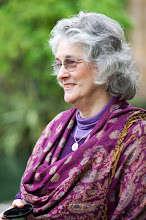
- I first learned to drive when I was about 10 by driving a tractor and a flatbed truck helping my dad farm. He was a seedsman, specializing in tomatoes, peppers and eggplants (nightshade family).
- The earliest ancestor we can trace who came to North America was a man (I don't know his name; will try to find out) who arrived in New Amsterdam around 1658 on a ship called De Vergulde Bever, the "Gilded Beaver." My maternal grandfather's name was Van Tine. I have lots of Van Tine relatives, the Protestant, anglophilic side. I see no Van Tines on the Gilded Beaver's passenger list, but I see "Gerrit Gerritsen van Gilthuys," which could be the name Gilruth, which is a maternal family name.
- My orphaned grandmother, née Kate Reilly, from Ballinasloe, Co. Galway, Ireland, on the River Suck, came to Moorestown, NJ (founded by Friends in 1682) via Philadelphia point of entry as in indentured servant to a caring Quaker family. Her siblings dispersed around Philadelphia, Pittsburgh, PA and Australia.
- I eat only organic food, very little in the way of carbs or dairy. I am a slender, fit gym rat.
- I have a giant crush on Anderson Cooper (yes, I know). Also on multi-talented Heathen Viggo Mortensen (not because of his role in LOTL either), Irish charmer George Clooney, younger Irish charmer Matthew McConnaughey, Irish Irish charmer Pierce Brosnan, and hunky Henry Simmons, "Baldwin James" on NYPD Blue. Oh, yes, almost forgot Chow Yun Fat. I guess that shows my tastes are conventional. I like them for their politics as much as for their looks and talent. I should note that all of them are younger than I, some considerably. I'm just an old feminist with a lusty appreciation for men.
- I'm a big fan of figure skating. My own ice skating experiences are limited to cranberry bogs in the Winter in New Jersey and a couple of ice rinks in California, such as Blyth Arena, built for 1960 Winter Olympics at Squaw Valley, and demolished in 1983.
- I love camping.
- I worked atop KT-22 (elevation 8,000 feet) during the Summer of 1961, after my freshman year at San Jose State College (now University). I rode the ski jump up the mountain every morning, where I stood on the landing platform and snapped photos of tourists as they sat in the chairs suspended over the valley floor 3,000 feet below.
Showing posts with label Anderson Cooper. Show all posts
Showing posts with label Anderson Cooper. Show all posts
Friday, June 22, 2007
Personal Tidbits
Taking up Chas Clifton's challenge, with inspiration from Deborah Lipp, here are eight things about me, six true and two false, that most people probably don't know:


Wednesday, May 16, 2007
Thinking about Deism
Some months ago I read a book I found intriguing. Breaking the Spell: Religion as a Natural Phenomenon, by Daniel C. Dennett, a philosopher who happens to be an atheist. He spoke from a mainstream position in the sense that the religions he considered, the ones he's most familiar with, are the Yahwist ones. I viewed his comments in that light and was able to find much food for thought.
There are now a few other books addressing the topic of excessive piety (primarily of the Abrahamic persuasion). Among them are:
The most recent is Christopher Hitchens' God Is Not Great: How Religion Poisons Everything. I've read Hitchens' work in Vanity Fair for some years. He's as irreverent a fellow as you'll find anywhere. However, he does have an ethical sense of goodwill towards humankind.
Last night when he was interviewed by Anderson Cooper on AC/360º about the death of evangelist Jerry Falwell, his responses were utterly scathing. He made no allowance for any possibility that Falwell might actually be sincere in his beliefs.
A few days before I read a review of God Is Not Great in the SF Chronicle, wherein this quote from the book appeared:
Besides my claim that no one can accuse Pagan religions of being organized, this quote got me to thinking of which of these claims was accurate in my perception and which might not be, as well as which characteristics I regard as being not beneficial.
In my experience of the best of our Pagan religions, we do not propagate violence, irrationalism, intolerance, hostility to free inquiry, contemptuousness of women and coerciveness toward children. On the contrary, my particular brand of Paganism espouses just the opposite: "We foster the questioning attitude." (Reclaiming Principles of Unity) In those ways, I think we're more evolved, if you will, than some of the more conventional religious paths. I think those attitudes come from many influences, not the least that we've been an outré religion, out of the mainstream, occult, if you will (shadowed, hidden). We arose from the counter-culture in the '60s and '70s. My stating this is not to discount our roots and earlier walkers along the paths we consider Pagan, merely to put things in some kind of useful perspective. We have been misunderstood and demonized, so we learned early on to keep to the shadows, to maintain discretion, if not complete secrecy.
All that has changed in the past 20 years. The change accelerated about 15 years ago, went into warp speed with the advent of the World Wide Web about 10 years running, and in the last five years has exploded, shedding glitter and glamour and cultural influence throughout the common culture. I attribute much of this acceptance to the work done by various public information officers in the Covenant of the Goddess (CoG). Although CoG is the oldest and largest organization of interdenominational Witches, this PR work has benefitted all Pagans, as well as others who choose unconventional religious pursuits.
The legacy of this hiddenness, however, has been our rather highly developed sense of tolerance for those who do not reflect the overculture, those who march to a different drummer. I think tolerance is one our Pagan gifts to the area of interfaith colloquy.
Within the wider Pagan population, some confirmation of Hitchens' accusation of alliance with racialism and bigotry can be found, unfortunately. They are the minority. I believe their attitudes stem from feelings of marginalization and disrespect and what I call a "yearning for authenticity."
We live in a pluralistic world. Everywhere humans have ventured upon this planet there has been cross-fertilization and blends of genes. There ain't no "pure" anything. The race is the human race, homo sapiens, hominid erectus, the naked ape. (My opinions leading to this statement come from readings of, among others:

Alas, I digress.
The term that really stopped me in this Hitchens quote is "tribalism." He asserts that religions/theologies promote tribalism. Well, what exactly is tribalism and what is a tribe? I know that the feeling we (using the term loosely for Pagans like me) get when dancing ecstatically round the bonfire is one of belonging to a tribe. The feeling I get when I gather with other Pagans is one I could only describe as tribal. Tribe being "a distinctive, close-knit social or political group." Tribal being "a tendency to form groups or strong group loyalty." Tribalism: "the behavior and attitudes that stem from strong loyalty to one's own tribe or social group." These last three definitions are listed in the unnamed dictionary on my iBook dashboard as being "derogatory." ???
I like them, and I don't feel derogated by having them used to describe me and mine.
In the complex and fragmented society in which we live, I think we all seek a feeling of belonging. Better yet that sense of belonging resonates in our skin, our bones, our heretic hearts. When I talk with other Pagans, when we discuss things at rituals, gatherings, festivals, social functions, online, I feel we are a tribe defining ourself. And that feels very comforting.
It's not that I feel especially alienated. I have a family who love me. I have kin of both blood and choice. So it's not that, exactly. Although I must admit that the majority of my chosen kin happen to be of one or another Pagan persuasion. But also of many sexual, political, professional, and intellectual persuasions.
Our tribal identity is fostered by many symbols, songs, books, rituals, words and terminology, and other cultural manifestations we hold in common. Most obvious is the witchen (for those who do not, strictly speaking, identify with the Pagan path of Traditional British Wicca) symbol of the encircled five-pointed star, the pentacle. Today pentacles are inscribed on the tombstones of Pagan military casualties. This is a huge step in recognizing our tribalism in a public way.
Again, I digress. I had thought to consider tribalism in light of monotheism or polytheism. As a polytheist, I feel I can name, worship, honor, praise, and identify with any deity or deities at any time I'm called to do so. Every 19 days I light a candle to tend the flame of Brigit in Kildare. (See my "Bridey in Cyberspace" in Irish Spirit: Pagan, Celtic, Christian, Global, Patricia Monaghan, editor.)

I attend Kali pujas on the New Moon near my home. Kali Ma has been my matron all my life. She has come upon me, acted through me, and loved me for all of my magical life.
To me, these deities are as real as anything. They stir my soul, they can make the hairs on my arms stand up, send a shudder up my spine, fill me with love and joy. And sometimes they don't.
There are now a few other books addressing the topic of excessive piety (primarily of the Abrahamic persuasion). Among them are:
The most recent is Christopher Hitchens' God Is Not Great: How Religion Poisons Everything. I've read Hitchens' work in Vanity Fair for some years. He's as irreverent a fellow as you'll find anywhere. However, he does have an ethical sense of goodwill towards humankind.
Last night when he was interviewed by Anderson Cooper on AC/360º about the death of evangelist Jerry Falwell, his responses were utterly scathing. He made no allowance for any possibility that Falwell might actually be sincere in his beliefs.
A few days before I read a review of God Is Not Great in the SF Chronicle, wherein this quote from the book appeared:
Violent, irrational, intolerant, allied to racialism and tribalism and bigotry, invested in ignorance and hostile to free inquiry, contemptuous of women and coercive toward children, organized religion ought to have a great deal on its conscience.
Besides my claim that no one can accuse Pagan religions of being organized, this quote got me to thinking of which of these claims was accurate in my perception and which might not be, as well as which characteristics I regard as being not beneficial.
In my experience of the best of our Pagan religions, we do not propagate violence, irrationalism, intolerance, hostility to free inquiry, contemptuousness of women and coerciveness toward children. On the contrary, my particular brand of Paganism espouses just the opposite: "We foster the questioning attitude." (Reclaiming Principles of Unity) In those ways, I think we're more evolved, if you will, than some of the more conventional religious paths. I think those attitudes come from many influences, not the least that we've been an outré religion, out of the mainstream, occult, if you will (shadowed, hidden). We arose from the counter-culture in the '60s and '70s. My stating this is not to discount our roots and earlier walkers along the paths we consider Pagan, merely to put things in some kind of useful perspective. We have been misunderstood and demonized, so we learned early on to keep to the shadows, to maintain discretion, if not complete secrecy.
All that has changed in the past 20 years. The change accelerated about 15 years ago, went into warp speed with the advent of the World Wide Web about 10 years running, and in the last five years has exploded, shedding glitter and glamour and cultural influence throughout the common culture. I attribute much of this acceptance to the work done by various public information officers in the Covenant of the Goddess (CoG). Although CoG is the oldest and largest organization of interdenominational Witches, this PR work has benefitted all Pagans, as well as others who choose unconventional religious pursuits.
The legacy of this hiddenness, however, has been our rather highly developed sense of tolerance for those who do not reflect the overculture, those who march to a different drummer. I think tolerance is one our Pagan gifts to the area of interfaith colloquy.
Within the wider Pagan population, some confirmation of Hitchens' accusation of alliance with racialism and bigotry can be found, unfortunately. They are the minority. I believe their attitudes stem from feelings of marginalization and disrespect and what I call a "yearning for authenticity."
We live in a pluralistic world. Everywhere humans have ventured upon this planet there has been cross-fertilization and blends of genes. There ain't no "pure" anything. The race is the human race, homo sapiens, hominid erectus, the naked ape. (My opinions leading to this statement come from readings of, among others:
- Before the Dawn: Recovering the Lost History of Our Ancestors, by Nicholas Wade;
- The Third Chimpanzee: The Evolution and Future of the Human Animal, by Jared Diamond;
- The Seven Daughters of Eve ; The Science That Reveals Our Genetic Ancestry, by Brian Sykes;
- 1491: New Revelations of the Americas Before Columbus, by Charles C. Mann;
- EarthMind: Communicating with the Living World of Gaia, by Paul Devereux, John Steele, and my Reclaiming friend, David Kubrin;
- The Spell of the Sensuous: Perception and Language in a More-Than-Human World, by David Abram.)

Alas, I digress.
The term that really stopped me in this Hitchens quote is "tribalism." He asserts that religions/theologies promote tribalism. Well, what exactly is tribalism and what is a tribe? I know that the feeling we (using the term loosely for Pagans like me) get when dancing ecstatically round the bonfire is one of belonging to a tribe. The feeling I get when I gather with other Pagans is one I could only describe as tribal. Tribe being "a distinctive, close-knit social or political group." Tribal being "a tendency to form groups or strong group loyalty." Tribalism: "the behavior and attitudes that stem from strong loyalty to one's own tribe or social group." These last three definitions are listed in the unnamed dictionary on my iBook dashboard as being "derogatory." ???
I like them, and I don't feel derogated by having them used to describe me and mine.
In the complex and fragmented society in which we live, I think we all seek a feeling of belonging. Better yet that sense of belonging resonates in our skin, our bones, our heretic hearts. When I talk with other Pagans, when we discuss things at rituals, gatherings, festivals, social functions, online, I feel we are a tribe defining ourself. And that feels very comforting.
It's not that I feel especially alienated. I have a family who love me. I have kin of both blood and choice. So it's not that, exactly. Although I must admit that the majority of my chosen kin happen to be of one or another Pagan persuasion. But also of many sexual, political, professional, and intellectual persuasions.
Our tribal identity is fostered by many symbols, songs, books, rituals, words and terminology, and other cultural manifestations we hold in common. Most obvious is the witchen (for those who do not, strictly speaking, identify with the Pagan path of Traditional British Wicca) symbol of the encircled five-pointed star, the pentacle. Today pentacles are inscribed on the tombstones of Pagan military casualties. This is a huge step in recognizing our tribalism in a public way.
Again, I digress. I had thought to consider tribalism in light of monotheism or polytheism. As a polytheist, I feel I can name, worship, honor, praise, and identify with any deity or deities at any time I'm called to do so. Every 19 days I light a candle to tend the flame of Brigit in Kildare. (See my "Bridey in Cyberspace" in Irish Spirit: Pagan, Celtic, Christian, Global, Patricia Monaghan, editor.)

I attend Kali pujas on the New Moon near my home. Kali Ma has been my matron all my life. She has come upon me, acted through me, and loved me for all of my magical life.
To me, these deities are as real as anything. They stir my soul, they can make the hairs on my arms stand up, send a shudder up my spine, fill me with love and joy. And sometimes they don't.
Subscribe to:
Posts (Atom)